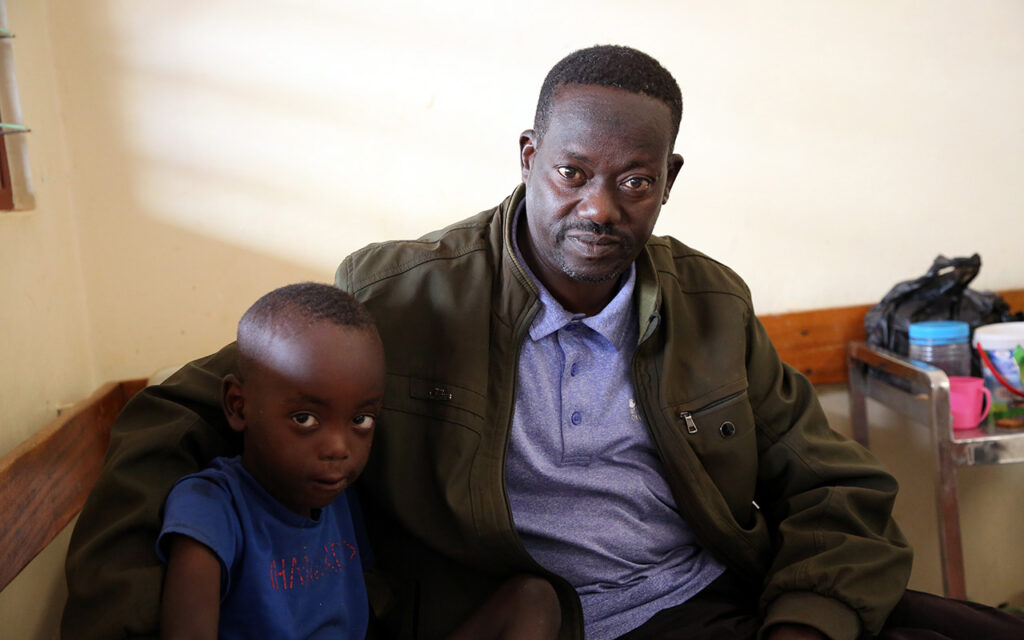
The morning after surgery, Ibrahim Abdalla Abdulshafi sat quietly beside his six-year-old son, Wahib, at St. Mary’s Hospital Lacor. For the first time in years, he allowed himself to breathe a little easier and relax.
The operation had gone well. Doctors were hopeful that the procedure would help Wahib place his foot properly on the ground and eventually walk normally. It was a small step for a child, but for Abdalla it felt like the beginning of something much bigger.
The journey to this hospital bed had been long. It had crossed borders, survived war, and outlasted years of uncertainty. It had also demanded extraordinary sacrifice from a father who was quietly fighting his own health battle.
“I sacrifice for the boy first,” Abdalla says softly. Those simple words tell the story of a man who lost almost everything, yet refused to lose hope.
Before conflict forced him to flee Sudan, Abdalla had built a life he was proud of. A trained lawyer, he worked as a national staff member with the United Nations mission in Darfur for nearly fourteen years. He was raising a family, pursuing professional goals, and had even begun a PhD study.
Then came war. A violent power struggle broke out between two rival military factions: the national army, the Sudanese Armed Forces (SAF) under General Abdel Fattah al-Burhan, and the paramilitary Rapid Support Forces (RSF) led by General Mohamed Hamdan Dagalo. His hometown of Al Fashir in North Darfur descended into chaos. Communities were uprooted, homes were destroyed, and livelihoods disappeared almost overnight.
“Our area in Al Fashir, North Darfur, has been destroyed completely,” Abdalla recalls. “Everything has been looted. My house has been damaged. Everything we gained by that time has been finished. Now we are at zero.” The conflict not only destroyed property; it interrupted a life carefully built over many years.
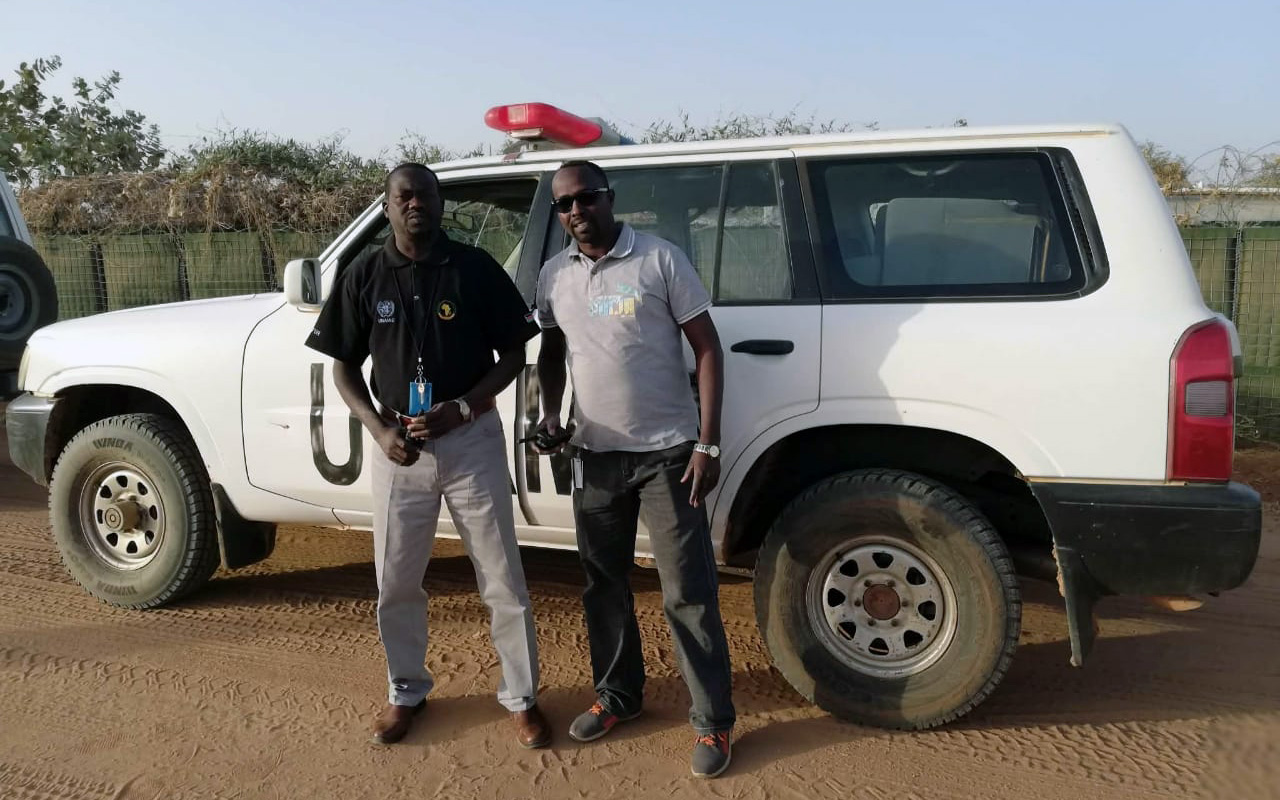
Abdalla (L) with a colleague during his UN days in Dafur
In July 2023, Abdalla fled to Uganda alone. His wife and five children followed several months later. Like thousands of other Sudanese families escaping conflict, they eventually found refuge in Kiryandongo Refugee Settlement. They arrived safely. But they did not arrive without burdens.
Among Abdalla’s greatest concerns was Wahib, the youngest of his five children. Long before war forced the family from Sudan, Wahib had been facing a medical challenge of his own.
Born in June 2020 during an unusually hot season in Darfur, the infant struggled during the first days of life. According to Abdalla, Wahib’s mother was unable to breastfeed him for three days after birth. Soon afterwards, he developed serious complications and was admitted to hospital for nearly two weeks.
At the time, doctors managed to stabilise him and he returned home. It was only later that Abdalla learned the ordeal had left lasting consequences. As Wahib grew older and began trying to stand and walk, Abdalla noticed something was wrong.
“When he stood up, I saw he was not able to put the two legs down properly,” he recalls.
Concerned, he returned to the doctors who had treated Wahib as a baby. They explained that the severe dehydration and feeding difficulties he experienced during his first days of life had led to complications, including kidney failure. Although the kidney condition had been treated successfully, they believed other effects remained and required further medical attention.
Determined to find answers, Abdalla took his son to specialists in Khartoum. There, doctors conducted examinations and prescribed medication, giving the family three months to see whether treatment would improve Wahib’s condition. If it did not, surgery would be needed.
The family was preparing to return for the next stage of treatment when the war erupted. Hospitals became inaccessible. Appointments were missed. The family fled. And the operation Wahib needed was suddenly beyond reach.
“The war broke out and there was nowhere to follow [treatment],” Abdalla says.
What should have been a routine follow-up became another casualty of conflict. As the years passed, Wahib’s condition became more noticeable.
“When he was young, it was a little bit okay,” Abdalla says. “But each time he was growing, the situation was becoming worse.”
After arriving in Uganda, Abdalla continued searching for help, moving from one health facility to another, but doctors confirmed what specialists in Khartoum had told him years earlier: the boy would need surgery from a specialised hospital. Like many refugee families rebuilding their lives from nothing, the cost was beyond their reach.
What few people knew was that Abdalla was carrying another struggle of his own. The former UN employee had suffered a heart attack and required daily medication. The medicines cost approximately UGX 180,000 each month, a significant expense for a refugee trying to survive on limited support.
Even then, his focus remained fixed on his son. Asked about his own treatment, Abdalla responds with little concern for himself.
“I sacrifice for the boy first.”
While searching for help for Wahib, he quietly continued managing his own condition, sometimes relying on friends and fellow refugees to help him access medication. But his priority never changed. If there was a choice between himself and his child, Wahib came first.
For months, Abdalla searched for a way to get the surgery his son needed. He knew the treatment existed. Doctors had identified the problem. The challenge was finding a way to access and afford the care.
Then hope arrived. In Kiryandongo Refugee Settlement, Lutheran World Federation (LWF), with funding support from the Church of Sweden, works to help vulnerable children access specialised health services that are unavailable within the settlement or beyond the means of refugee families.
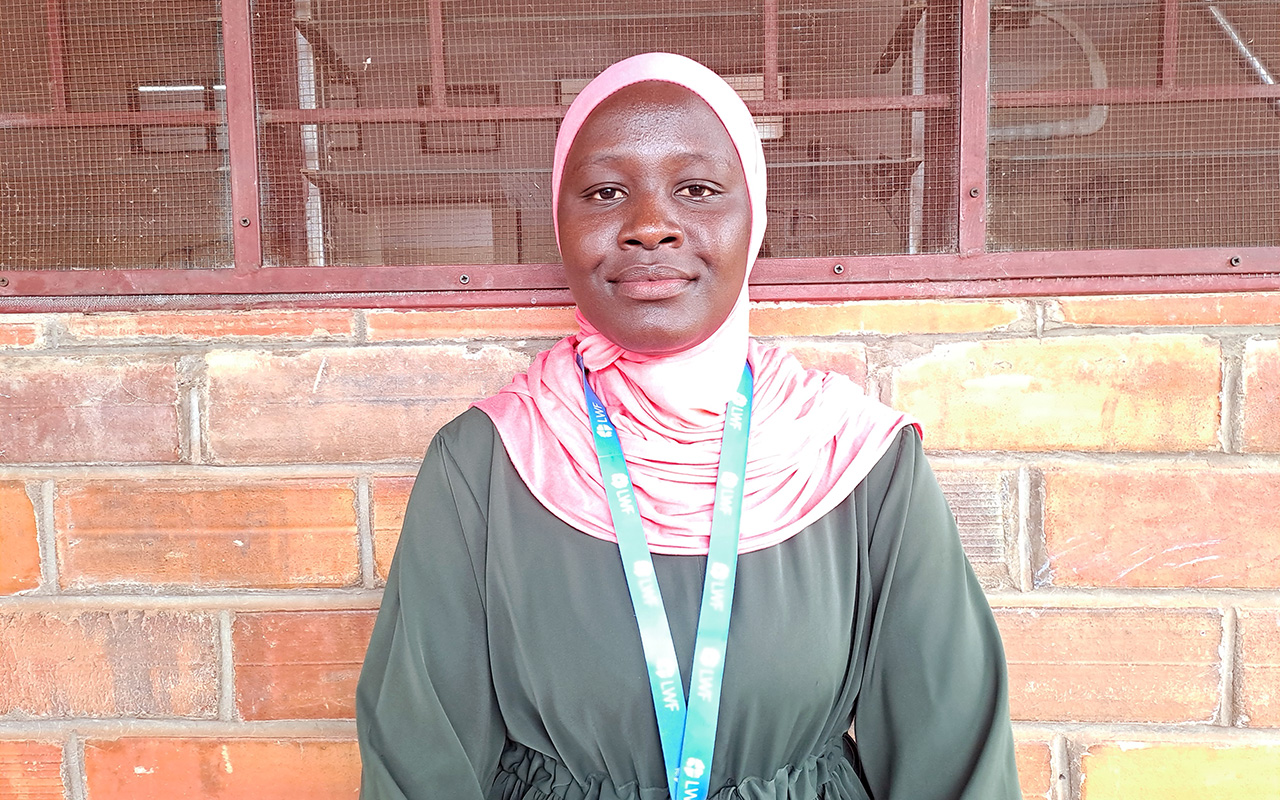
Awino Asha, a Project Assistant with LWF
Awino Asha, a Project Assistant with LWF, helps identify and support children whose conditions require treatment outside the camp.
“Refugees cannot afford specialised treatment outside. Currently, UNHCR only provides basic medical services in the camp,” she explains.
Working with community structures and health facilities, LWF identifies vulnerable children, facilitates assessments, and organises referrals to specialist providers. Wahib became one of those children. Through the programme, his case was assessed and referred to St. Mary’s Hospital Lacor.
“Finally, thank God, I found Sister Asha,” Abdalla says. “And we arrived now at this point.”
LWF’s partnership with St. Mary’s Hospital Lacor did not happen by chance. According to Asha, Lacor was chosen because it could provide specialised care at a cost that allowed more refugee children to benefit from the programme.
“Lacor being the nearest hospital around Kiryandongo, the management saw it as an opportunity,” she explains. “The prices are a little bit fairer compared to other hospitals.”
The partnership has already enabled dozens of children to access surgeries, assistive devices, and specialist care that would otherwise remain beyond their reach. For Abdalla, what mattered most was that his son finally had access to the treatment he had been seeking for years.
At Lacor Hospital, doctors assessed Wahib and performed surgery to improve the positioning and function of his leg. According to Asha, the goal was to help him place his foot properly on the ground and move more naturally.
“For now, when he’s moving, he moves with the toe,” she explains. “We hope after the surgery he will be in position to balance the leg down and walk normally.”
For Abdalla, the surgery represented far more than a medical procedure. It meant the possibility of seeing his son walk comfortably. It meant school becoming easier. It meant fewer limitations and more opportunities. It meant hope.
Wahib’s story is not unique. Across Kiryandongo Refugee Settlement, many children continue to live with conditions requiring specialised treatment, assistive devices, or surgical intervention.
“There are so many children that need specialised treatment,” says Asha. “There are so many that need assistive devices.”
According to LWF, more than thirty children have already been supported through the programme, while many others continue to wait for assistance. Many of their conditions existed before displacement. Others worsened because conflict disrupted access to healthcare, antenatal services, and early treatment.
Today, Abdalla does not know when he will return to Sudan. The home he left behind is gone. The future remains uncertain. But for the first time in years, he can imagine something better for his youngest son.
Thanks to support from Lutheran World Federation, funding from the Church of Sweden, and treatment at St. Mary’s Hospital Lacor, Wahib has been given a chance to walk again and pursue the childhood that war nearly interrupted.
Abdalla still faces challenges of his own, including the heart condition he quietly manages while raising five children in a refugee settlement. Yet his focus remains unchanged.
“I sacrifice for the boy first.”
It is the kind of promise only a father can make.