Right from birth, food has connected babies to their mothers. The connection, joy, and comfort a child finds while suckling grow even deeper when they begin to eat solid food. Every mother carries that quiet worry in her heart: Has my child eaten? Are they safe? It is a feeling shared by women everywhere, a bond woven through care, hunger, and love.
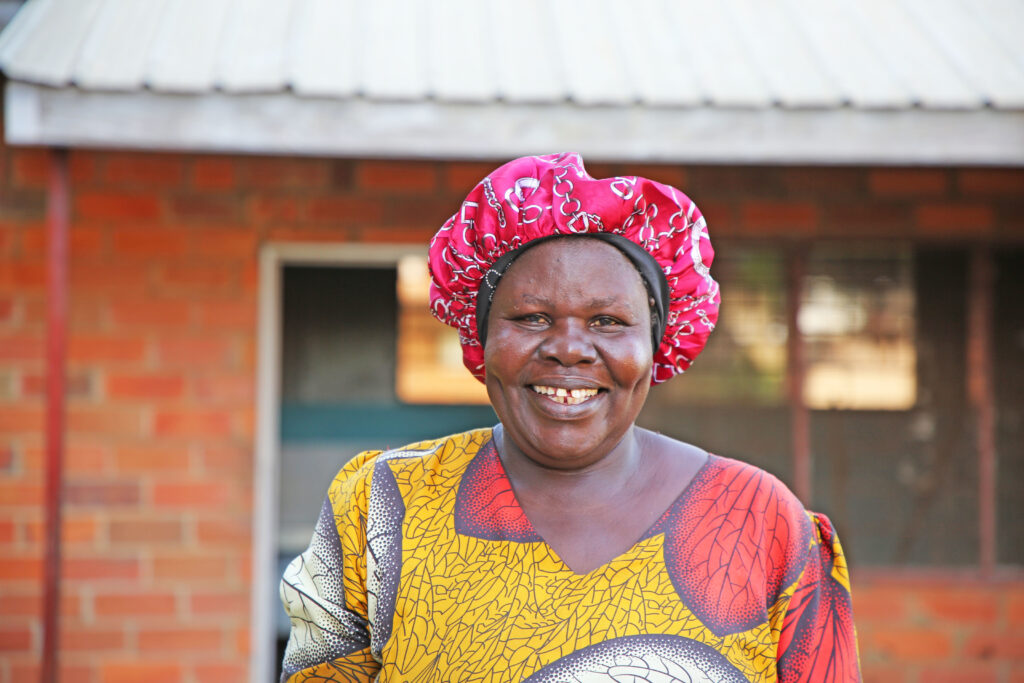
It is that same heart that our interns feel at their residence, because there is a mother among them. Her name is Auma Janet. She is known for her warmth, her generosity, and her cooking, especially her pork, which everyone praises. To many, she is not just a cook. She is the mother who makes sure no one misses a meal.
Meet Janet.
Her journey began in the year 2000, a time when Ebola was tearing through northern Uganda. Many people fled in fear. Lacor Hospital was one of the few places that stayed open, fighting to save lives. But while others ran from danger, Auma felt something greater pulling her forward, the responsibility of caring for her family after her father’s death. As the eldest of five children, she had to find a way to support them.
“I went straight to a sister called Pascolina and asked if there was any job I could do on the ward,” she recalls. “I knew I had little education, but I believed I could help. They had just recruited two new staff, so there was no opening. Then they asked if I could cook. Immediately, I accepted and started work.”
That decision was the beginning of her lifelong calling. She first cooked for malnourished children and for the Ebola victims. After a year, she was moved to the Health Training Institute, where she worked for three years before joining the interns’ residence in 2004. Since then, she has never looked back. 
At the residence, Auma discovered how deeply she loved cooking. It was not merely preparing food; it was watching young people eat with joy, knowing she was giving them strength.
“It feels like looking after my children, my brothers and sisters at home,” she says. “The joy that comes from that is something only a mother can explain. With this work, I know which of my children eats what and even how most of them behave. That makes me a super mother.”
And truly, she is. She mothers not only young men and women but doctors in the making.
“I once dreamed of helping patients in the wards,” she says softly. “But God wanted me to be something else; the one who gives energy and well-being to those saving lives. I am very proud when these boys and girls call me mego, which means mother.”
Through commitment and discipline, Auma has built a life she is proud of. She bought a small piece of land, built a home, and educated all her children. One is a graduate teacher, another is a driver, one is studying nursing at the Lacor Health Training Institute, and her last-born is in secondary school at St. Joseph’s College, Layibi.
What touches her most is when former interns return just to say thank you.
“The word Apwoyo means so much to me,” she says. “Last year, one of them came for a surgical camp and brought some money to say thank you. Moments like that show you that your work is appreciated, and you choose the same job again and again.”
When asked what keeps her going, she smiled and said it is self-discipline.
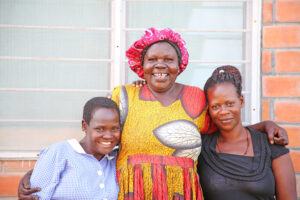
Auma (Middle) and colleagues at work
“Never think you are nothing, and never think you are everything. Just believe you are something. With that, you can achieve almost anything. To the young people building their careers, my advice is simple: value the job you have, keep time, love your team, respect the place you work, and handle its property with care. Work well, be humble. There is always an invisible eye watching.”
For twenty-five years and counting, Auma has lived by these values and has seen her through times she didn’t believe she could navigate. It is about the willingness that comes from loving others through service.
She may not wear a white coat, but she has nourished generations of doctors, giving them the energy to save lives. In every meal, and in every smile, she showed that care is not only found in medicine. Sometimes it is found in a warm plate of food and the gentle presence of someone who treats you like family.
Auma’s legacy is written in the gratitude of those who passed through her hands, and in every Apwoyo that returns to her.


