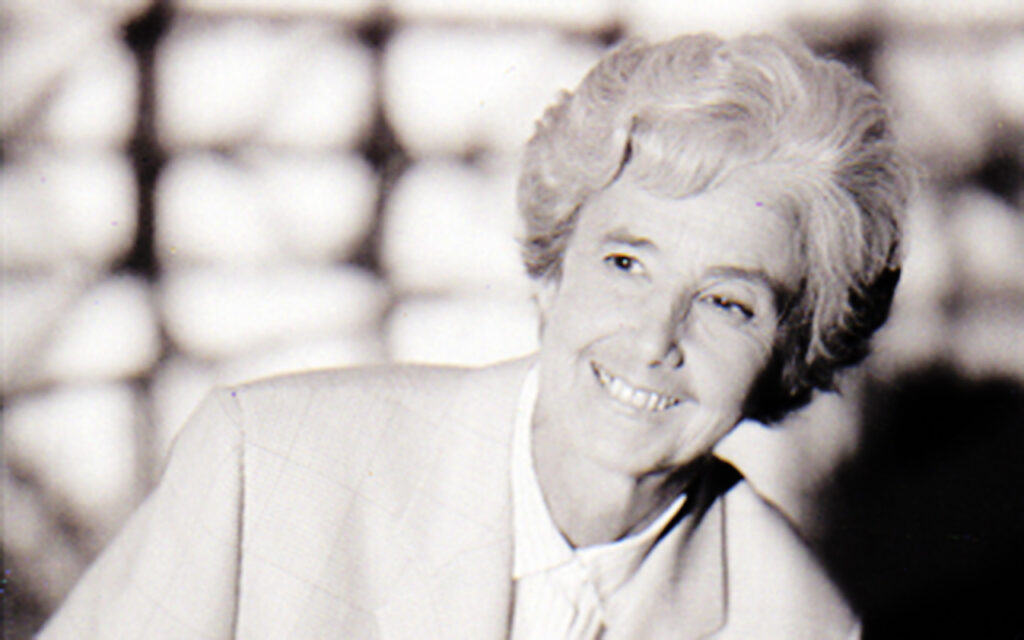
Beneath the towering canopy of an ancient tree at St. Mary’s Hospital Lacor lies a quiet sanctuary. Dappled sunlight filters gently through the leaves onto a stone garden, illuminating a weathered grotto crowned by a statue of the Virgin Mary. Here, in the soil of Northern Uganda, rests Dr. Teasdale Lucille. Beside her lies her husband and lifelong partner, Dr. Piero Corti. Together in death, as they were in life, they remain at the heart of the institution they built from a small mission hospital into one of Africa’s most respected centers of healing.
For many visitors, the modest graves may seem an unlikely memorial to two people whose work transformed healthcare in Northern Uganda. Yet those who know Lacor Hospital understand that this is exactly where Lucille belonged. During her lifetime, she became much more than a doctor. To patients, she was a healer. To students, she was a teacher. To colleagues, she was a demanding mentor. To the Acholi people, she became “Min Atim” — the mother of Atim — a title that reflected not only her relationship with her daughter Dominique but also the affection and respect of an entire community.
Thirty years after her death on 1 August 1996, the story of Dr. Lucille remains woven into every corner of Lacor Hospital. It is a story of extraordinary courage, relentless service, sacrificial love, and a dream that continues to save lives long after its founder’s passing.
A Girl Who Refused Limits
Long before she became one of the most respected surgeons in Uganda, Lucille was a determined young girl growing up in a working-class neighbourhood of Montreal, Canada. At the age of twelve, after hearing missionary nuns speak about their work among poor children in China, she decided that she would become a doctor and dedicate her life to helping the poor. It was a bold dream in the 1940s and 1950s, when relatively few women entered medicine and even fewer ventured into surgery.
The obstacles came early. Friends warned her that surgery was a man’s profession. Some insisted that no mother would entrust her child’s life to a female surgeon. Lucille ignored them all. She worked harder than her peers, completed her medical studies with distinction, and became one of Quebec’s pioneering female surgeons.
Her determination would become one of the defining characteristics of her life.
Years later, reflecting on the path she had chosen, Lucille explained her understanding of medicine: “Being a doctor is not a profession but a vocation, a way of dedicating oneself to people. And if you do it, why not do it for those who need it most?” she said, as quoted in Doctor Lucille: A Life for a Dream.
A Dream Takes Shape in Africa

Delivering a baby
In 1958, while training in Montreal, Lucille met a young Italian doctor named Piero Corti. Like her, he dreamed of serving where the need was greatest. Their paths crossed again in Europe, and eventually Piero invited her to Uganda to help establish surgical services at a small mission hospital near Gulu Town.
Lucille agreed to go but only for a few months. That was in 1961. She never left.
What greeted her upon arrival was far removed from the sophisticated hospitals where she had trained. St. Mary’s Hospital Lacor consisted of a handful of wards and a small team of missionary sisters. Resources were scarce. Equipment was limited. Electricity was unreliable. There was no proper operating theatre. Yet the needs of the population were immense.
Writing to her sister shortly after arriving in Gulu in 1961, Lucille confessed both the challenge and excitement of the work before her: “It is very stressful but at the same time it is fascinating because I have the possibility of doing so much for these people.” The words appear in Doctor of Courage and reveal how quickly Uganda captured her heart.
On her very first day at the hospital, she encountered a woman in obstructed labour who desperately needed a Caesarean section. There was no other surgeon to call upon. Lucille had never performed the operation herself. She hurried to consult her textbooks, reviewed the procedure, and then carried it out successfully. The mother survived. So did the baby.
That operation foreshadowed the next thirty-five years of her life. Faced with impossible circumstances, she simply found a way.
Building Hope in the Savannah

Lucille and Corti at Lacor
Together, Lucille and Piero transformed Lacor Hospital one ward, one department, and one patient at a time.
What began as a small mission facility grew into a major referral hospital serving hundreds of thousands of people. New wards were built. Surgical services expanded. Training programmes were established. Health centres were opened in surrounding communities. The nursing school was created. Generations of Ugandan health workers were trained and mentored.
Yet neither saw the hospital merely as a collection of buildings. They believed that lasting development meant investing in people.
Lucille believed that the future of Lacor depended on empowering Ugandans to lead it. “Africanisation does not mean training people quickly and replacing a white person with a black person; it means working together over a long period of time,” she said in Doctor Lucille: A Life for a Dream.
And so the doctors, nurses, managers, and educators who run Lacor Hospital today are living evidence of a vision that extended far beyond the founders’ lifetimes.
The Surgeon Who Knew Everyone
To understand Lucille’s influence, one must look beyond infrastructure and statistics.
Dr. Martin Ogwang, who worked with her in the early 1990s, remembers a woman who combined several roles at once. She was a surgeon, gynecologist, teacher, mentor, and head of the outpatient department. Because nearly every patient passed through her hands, she seemed to know almost everyone in the hospital.
“She was really very hard-working and committed to her work, and I think at the expense of her health,” recalls Dr. Martin. “She did not care too much about lunch. She did not care too much about her own health… she was only vouching for patient care.”
She also paid special attention to vulnerable patients. Long before cervical cancer screening became common practice, she routinely examined older women for signs of disease. She advocated for women struggling with infertility and monitored patients suffering from chronic malaria to avoid any complications. She ensured that no patient, however poor, was overlooked.
Her work ethic became legendary. Lunch could wait. Rest could wait. Patient care came first.
According to colleagues, she often worked with an intensity that seemed to ignore her own wellbeing. Yet patients adored her because they knew she genuinely cared.
Her devotion was perhaps best summed up by Dr. Matthew Lukwiya, one of the many doctors she mentored and who later became a national hero in 2000 for leading the fight against the Ebola disease. “Whatever Lucille did, she did for the patient,” he recalled in Doctor Lucille: A Life for a Dream.
A Teacher and Mentor

Drs Piero, Lucille and Matthew Lukwiya
Lucille’s influence reached far beyond the operating theatre. She demanded excellence from young doctors. She would assign responsibility, insist on accountability and follow up relentlessly. She expected people to justify their decisions and care for patients as if they were their own family members.
Many regarded her as strict. But few forgot her lessons.
“She was a very skilled surgeon, and she was also a very good teacher,” remembers Dr. Martin. “She wanted to teach all the young people who had interest in surgery to learn the skills that she had.” Dr. Martin credits her with shaping his own journey into surgery. Like many young doctors trained at Lacor, he benefited from her guidance, mentorship, and willingness to share her skills.
Yet Lucille believed that training a health worker involved much more than developing clinical competence. One lesson she repeatedly emphasised was what staff came to know as “hospital economy.” Doctors, nurses, and students were taught to use resources carefully, avoid wastage, and treat every piece of equipment, every suture, and every medical supply as a precious asset. The principle was simple: every shilling saved could help another patient receive treatment.
Dr. Martin recalls that hospital economy was preached across the entire institution. Staff learned to preserve equipment, avoid careless losses, and make the most efficient use of the limited resources available. For Lucille, stewardship was not merely good management; it was part of patient care itself. Resources conserved today meant medicines, supplies, and services would remain available for the next person in need.
Her passion for learning was equally infectious and she encouraged staff to read medical journals, stay abreast of new developments, and seek continuing education. She brought visiting surgical teams to Lacor long before international medical partnerships became common. Plastic surgery, pediatric surgery, and specialised clinical camps became part of the culture she helped establish and many of these practices still continue today.
 For all her reputation as a demanding surgeon, Lucille possessed a remarkably warm and human side. After the day’s work was done, the strict teacher gave way to a gracious host, a keen conversationalist, and a beloved figure among the children of the hospital compound. Colleagues remember her walking through Lacor in the evenings with Piero, stopping to chat with staff and play with children who trailed happily behind them. It was a glimpse of the woman behind the white coat: compassionate, approachable, and deeply connected to the community she had chosen as her home.
Dr. Martin recalls that newly arrived doctors and interns were often invited to spend time with Lucille and Piero over tea, soft drinks, or a glass of wine. “You had that chance of taking it with the Cortis and being able to talk to them,” he says. For young doctors arriving at the hospital for the first time, these informal gatherings offered not only hospitality but an opportunity to learn from the couple whose lives had become inseparable from the institution they had built.
The War Surgeon
Uganda’s turbulent history inevitably shaped Lucille’s life. The years following independence gave way to military dictatorship, civil conflict, and decades of insecurity in Northern Uganda. As violence escalated, many doctors and professionals left the region. Lucille and Piero stayed.
In one letter written during the conflict, she acknowledged the danger while explaining why departure was never really an option. “For the moment, we have no choice. We are the only doctors left in Gulu,” she wrote, a reflection preserved in Doctor Lucille: A Life for a Dream.
The hospital became a refuge. Soldiers, civilians, women, and children arrived with horrific injuries. Gunshot wounds became common. Landmine injuries increased. Supplies dwindled and the risks multiplied.
Lucille became, in the words of many who knew her, a war surgeon. She performed more than a thousand operations on victims of conflict. Working under primitive conditions, often with limited protective equipment, she treated everyone who needed care regardless of political affiliation or background.
It was during those years that fate dealt her its harshest blow. While operating on patients, long before HIV was fully understood and before modern universal precautions became standard, Lucille contracted the virus that would eventually claim her life.
The Cost of Compassion

When she learned she was HIV positive in 1985, Lucille could have stepped away from surgery, returned permanently to Canada or Italy but she did not. Instead, she continued working. She continued operating. She continued teaching. She continued fundraising for the hospital. And she continued advocating for people living with AIDS at a time when stigma was widespread and treatment options were limited.
Her own explanation reflected her character.
Asked about contracting HIV through surgery, Lucille refused to indulge bitterness. “Every profession has its risks,” she said. “Surgery carries this risk; I took it, and I was unlucky.” Her words, quoted in Doctor Lucille: A Life for a Dream, reveal a remarkable acceptance of the sacrifice her work demanded.
And she refused to let fear define her remaining years.
Atim and the Dream That Refused to Die

Lucille, Piero and little Dominique
Today, one of the most visible expressions of Lucille’s legacy is found in her daughter Dominique Atim Corti.
Born at Lacor Hospital in 1962, Dominique grew up among the wards and patients her parents served. As a child, she followed her mother through hospital corridors and operating theatres. Her first language was Acholi. Her first home was Gulu.
Ironically, there was a stage in her life when she wanted nothing to do with hospitals.
Years of watching her parents devote themselves tirelessly to Lacor left her exhausted by the very idea. Yet eventually she embraced the same mission in a different way. After qualifying as a doctor, she set aside clinical practice and dedicated herself to fundraising and support for Lacor Hospital through the foundations established by her parents.
“You have to help someone in life and if you can, why not help the people who are in need?” Dominique says. “There are many wonderful professional doctors here. What they need is the support to continue their work.”
Today, much of the support that sustains Lacor’s work can be traced to those efforts. In many ways, Dominique became a bridge between the dream her parents began and the generations carrying it forward.
Thirty Years Later
On 1 August 1996, Lacor Hospital lost its surgeon and Northern Uganda lost one of its greatest champions. But the dream did not die.
Thirty years later, the operating theatres still function. The training schools still educate health workers. The health centres still serve communities. The values of compassion, integrity, accountability and service remain woven into the hospital’s identity.
Every day, patients walk through gates that Lucille helped build. Many may never know her story. Yet they continue to benefit from it. Perhaps that is the truest measure of a life well lived.
Looking back on those difficult years, Lucille once reflected on what kept her going. “I believe that a person either has moral strength or does not. If they have it, they go on and face the situation, convinced of what they are doing. Had we left, all of this would have collapsed,” she said in Doctor Lucille: A Life for a Dream.
It was then fitting that Piero brought her body back home after she died in Italy where she was taken for advanced medical care and laid her to rest in the grounds of the hospital she loved. Her grave is not merely a memorial. It is a reminder of a promise she made more than six decades ago when she chose to stay in Northern Uganda and serve those who needed her most among the Acholi people.
Supporting Lacor Hospital today is not simply supporting a healthcare institution. It is sustaining a vision built through sacrifice, courage, compassion, and an unwavering belief that every human life matters.
Thirty years after her death, Dr. Teasdale Lucille may no longer walk the wards of Lacor Hospital. But her spirit still does.

Lucille’s final resting place at Lacor Hospital

